























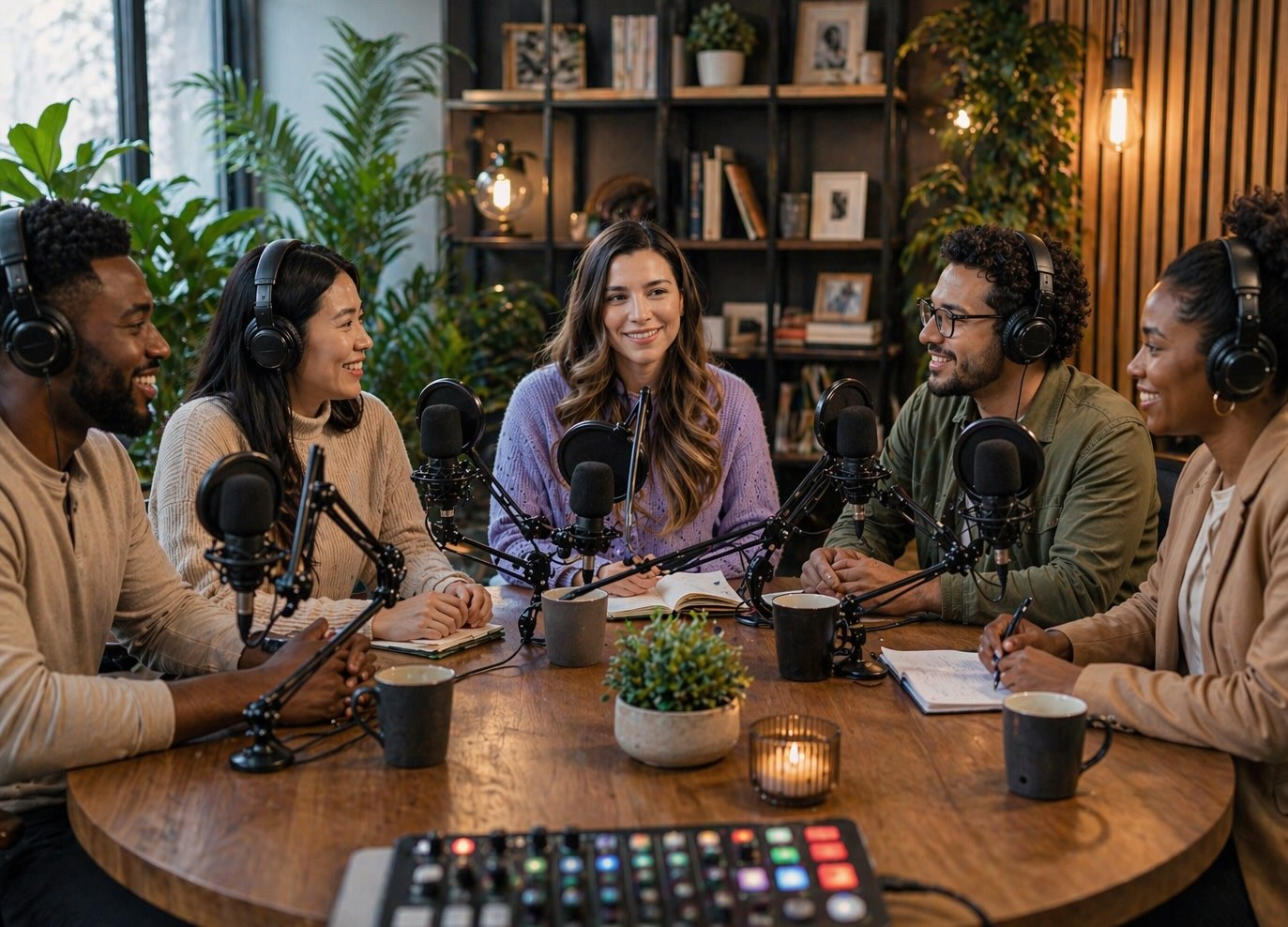
The podcast business in the United States is no longer just about earbuds, long-form interviews, and niche audio fandoms. It is becoming a full-scale, cross-platform media force — and video is helping drive the next era of growth. According to an April 21, 2026 analysis from S&P Global Market Intelligence, podcast consumption among U.S. online adults has climbed sharply, with nearly 60% now reporting that they listen to podcasts. That jump signals more than audience growth. It marks a broader transformation in how podcast content is created, discovered, and consumed.
At the center of that shift is a simple but powerful industry reality: today’s podcast audience does not just want to hear the conversation. Increasingly, it wants to watch it. The rise of video podcasts has expanded the category beyond traditional audio platforms and into a more visually driven media ecosystem, where creators are building personality, loyalty, and cultural influence through both sound and screen.
That matters because podcasts are no longer competing only within the audio lane. They are now competing for attention in the same environment as streaming video, social media clips, YouTube programming, and creator-led digital entertainment. In that context, video becomes more than an add-on. It becomes a growth engine, a discovery tool, and a branding advantage.
S&P’s findings show that 62% of podcast listeners say they watch video podcasts on YouTube, making it the leading destination in this fast-changing space. Netflix follows at 34%, with Spotify at 23% and Apple at 11%. Those numbers reflect a consumer audience that is increasingly comfortable moving between listening and watching depending on the setting, platform, and type of content. In other words, the modern podcast is not confined to one format. It lives wherever the audience chooses to engage.
That shift also says something important about consumer behavior in 2026. Audiences want flexibility. They want to press play while driving, switch to video at home, and share standout moments through clips, reels, and visual snippets. Podcasting is evolving into a multimedia habit, and creators who understand that are positioned to win.
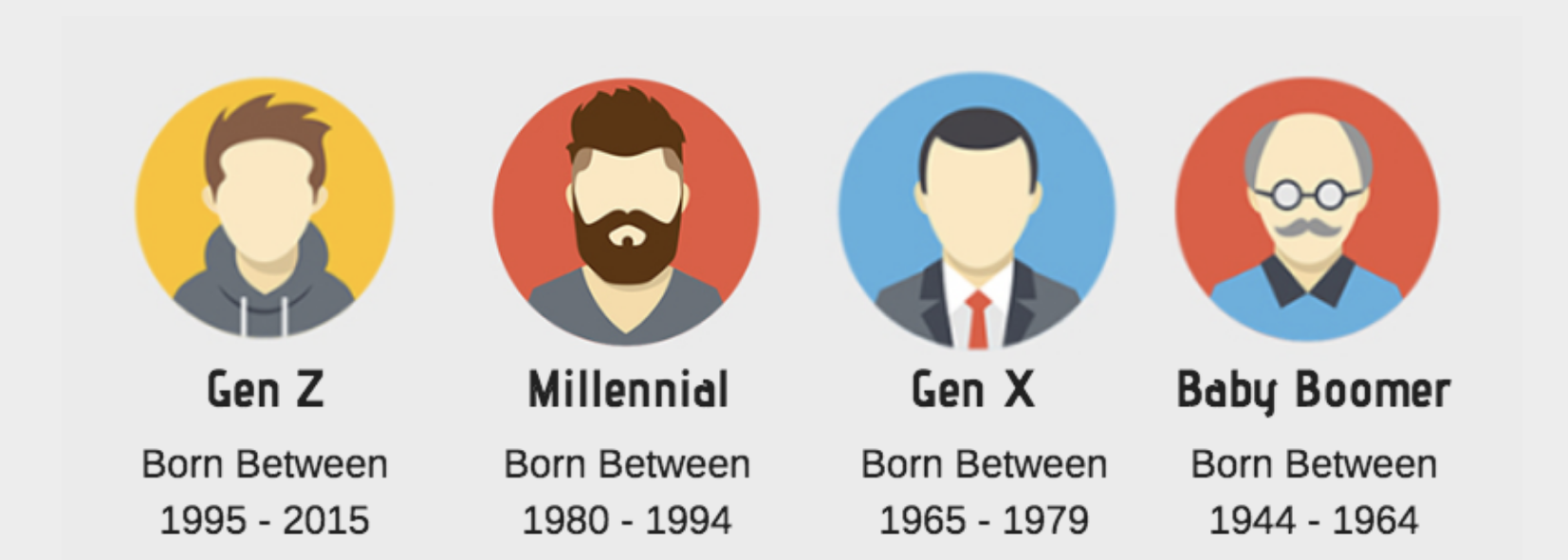
S&P’s analysis also highlights a sharp generational divide in adoption. Adults ages 25 to 34 represent the largest single segment of podcast listeners, showing that younger audiences continue to drive the medium’s cultural momentum. By contrast, respondents 55 and older made up 44% of the survey population but only 17% of listeners, revealing that podcast engagement still skews meaningfully younger. The 65+ audience registered the lowest participation, accounting for just 7% of total survey participants.
That age gap is one of the clearest signals for advertisers, publishers, and platforms. Podcasting still offers substantial room for growth among older consumers, but right now it remains especially strong among audiences who are already fluent in digital media behavior and comfortable with on-demand content.
Genre preference adds another layer to the story. News and politics leads as the most popular category, followed by comedy, sports, and true crime. Those rankings underline podcasting’s unique mix of utility and entertainment. Consumers are using podcasts both to stay informed and to unwind. But S&P also found that genre selection remains highly shaped by gender. Seventy-five percent of sports podcast listeners are male, while 63% of true crime listeners are female. Health and wellness podcasts attract a 59% female audience, while business and entrepreneurship content draws a 66% male audience.
These listening patterns reveal a market that is broad, but not generic. Podcasting is a mass medium with highly targeted audience pockets. That is one reason the format continues to attract brands, media companies, and entrepreneurs looking for deeper audience relationships.
A few of the biggest takeaways from the S&P analysis stand out clearly:
- Podcast listening is surging, with nearly 60% of U.S. online adults now saying they tune in.
- Video is reshaping the category, with YouTube leading as the top video podcast destination.
- Younger adults remain the core growth audience, especially listeners ages 25 to 34.
- News and politics leads all genres, proving podcasts remain a major source of information and commentary.
- Audience behavior is highly engaged, with 67% of listeners tuning in at least weekly.
- Home remains the top listening environment, accounting for 69% of podcast consumption.
Platform competition is also intensifying. S&P reports that Spotify leads podcast platform usage at 45% in 2026, up from 40% in 2025, while YouTube Music stands at 39% and Amazon Prime Music at 30%. Apple Podcasts held steady at 23% year over year. That steady Apple figure is notable: even as newer viewing and streaming behaviors reshape the market, legacy podcast platforms still maintain an important role.
The bigger picture is clear. Podcasting is no longer a side category in digital media. It has become a mainstream content habit with strong weekly engagement, expanding platform competition, and increasing crossover with video culture. Industrywide, media companies have also been pushing harder into ad-supported and hybrid distribution models, reinforcing how valuable high-engagement digital audiences have become across streaming and content businesses.
For publishers, creators, and media brands, the message is undeniable: the future of podcasting belongs to those who think beyond audio alone. In 2026, the most successful podcast strategies will not just ask what audiences want to hear. They will ask what audiences want to watch, share, and return to every single week.

Reference report source:
Report Lela Christine