



















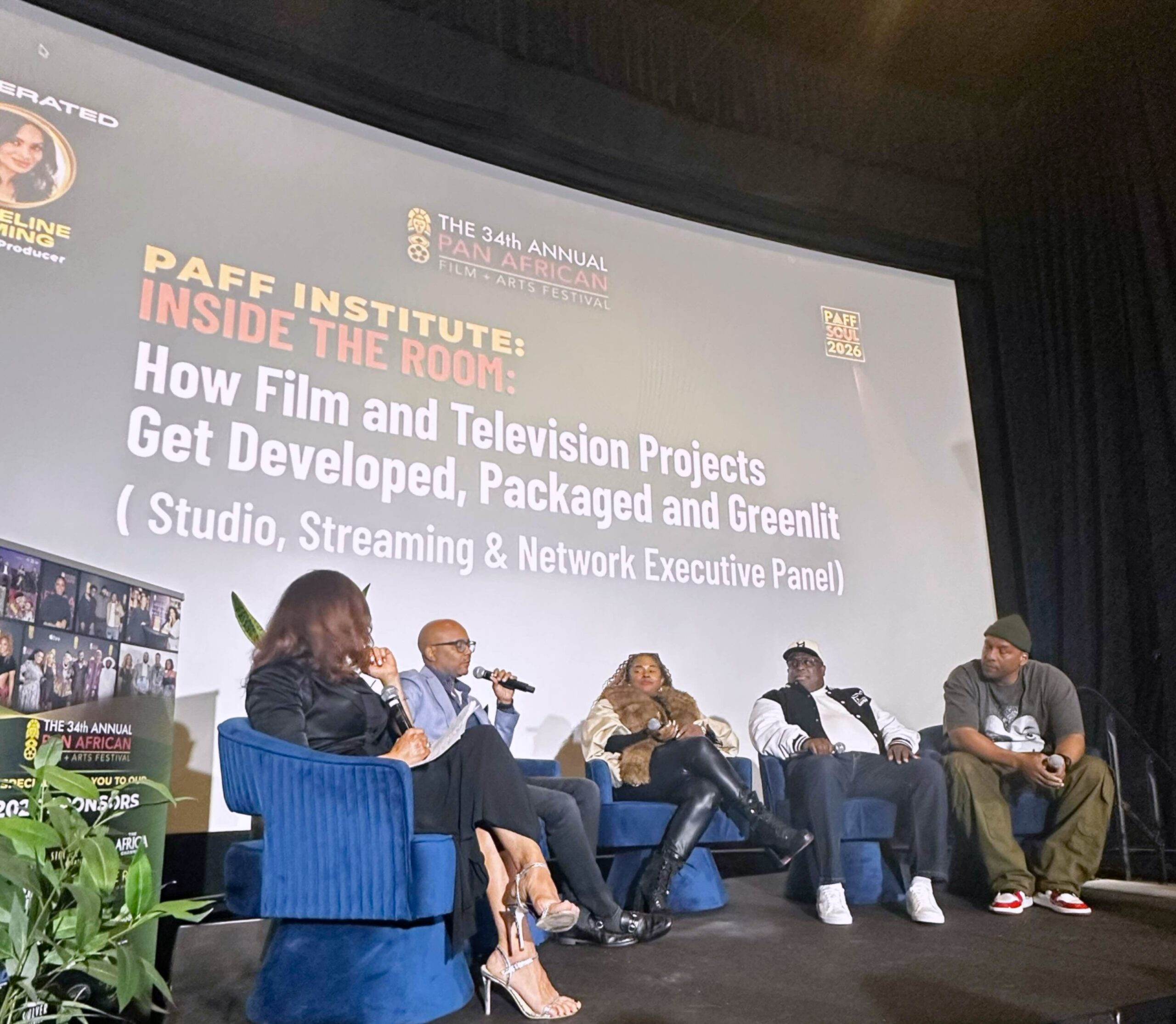
The afternoon at the Pan African Film Festival (PAFF) inside The Culver Theater was nothing short of electric. The room was filled with filmmakers, media executives, content creators, and emerging storytellers eager to understand what it truly takes to move a project from script to screen. And this was not surface-level inspiration. This was a masterclass.
The Power Filmmaker Panel brought together development executives and leaders from high-profile production companies for a candid, filmmaker-facing conversation about how decisions are made, what mandates look like inside major studios, and what the market is actively buying right now. For anyone serious about entering the film business, the message was clear: passion is essential, but strategy is power.
From Script to Screen: The Real Journey
Moderated by Jaqueline Fleming (Actress | Producer), the discussion unpacked the layers of development, packaging, financing, production, post-production, and distribution. It was an honest look at the business mechanics behind the art.
The panel emphasized that understanding the full production pipeline is non-negotiable:
-
Development: Knowing how to craft a marketable script and align with buyer mandates.
-
Packaging: Attaching the right director, cast, and producing partners to elevate value.
-
Financing: Blending equity, tax incentives, pre-sales, and strategic partnerships.
-
Production: Managing budgets, schedules, and creative execution.
-
Post-Production: Editing, scoring, color grading, and preparing deliverables for platforms.
-
Distribution & Marketing: Positioning projects for theatrical, streaming, or hybrid release.
One of the strongest takeaways? Filmmakers must think like CEOs. The panel reinforced that storytelling is only one half of the equation. The other half is understanding business positioning.
Mentorship: Learn From Those Who’ve Done It
A standout voice on the panel was Juanita Stokes, founder of Footage Films Studios. Her insights were rooted in experience and longevity. She spoke about the value of mentorship — learning from those who have navigated production cycles, distribution negotiations, and the ever-changing streaming landscape.
Her message resonated deeply:
“Don’t just get in the game. Study the game.”
For emerging filmmakers, mentorship is a shortcut to wisdom. It can help avoid common pitfalls in budgeting, investor relations, and deliverables that networks require. The afternoon underscored that building relationships with seasoned producers can shift careers forward faster than talent alone.
The Studios Speak: What the Market Is Buying
Executives from ALLBLK, NBCUniversal, Amazon MGM Studios, and Lifetime offered rare transparency about internal mandates. They discussed audience data, genre demand, and the importance of culturally authentic storytelling.
Key themes shaping buyer decisions today include:
-
Elevated thrillers and suspense
-
Faith-based and inspirational stories
-
Relationship-driven dramas
-
True-story adaptations
-
Content that speaks to underrepresented audiences
Executives made it clear: they are buying content that is both commercially viable and culturally resonant. Filmmakers must research platforms before pitching. Knowing where your project belongs increases your odds of greenlight conversations.
Production Powerhouses on Stage
The presence of dynamic production companies added further depth.
Tri Destined Studios, led by CEO Nikaya “ND” Brown Jones and President/Partner Trey Haley, has built a reputation for high-quality diverse storytelling. Their executive team discussed producing content for major platforms like BET and emphasized ownership, consistent branding, and audience targeting.
Meanwhile, Hidden Empire Film Group, founded by producer Deon Taylor and Roxanne Avent Taylor, shared insights into expanding beyond production into distribution through Hidden Empire Releasing. That strategic pivot highlights a growing industry truth: vertical integration creates leverage.
For filmmakers, this shift is critical. Understanding distribution models — from self-distribution to studio-backed releases — empowers creators to maintain control and maximize revenue streams.
Finance & Post-Production: Where Deals Are Won
The panel dug deep into financing structures. Independent filmmakers often struggle here, yet it’s where sustainability begins. Investors want clarity on recoupment plans, tax credit structures, and audience projections.
Post-production was also framed as a critical decision point. Deliverables for networks and streaming platforms are highly technical. Missing specifications can delay deals or disqualify projects entirely.
Filmmakers were encouraged to:
-
Hire experienced line producers
-
Consult entertainment attorneys early
-
Budget properly for post and marketing
-
Prepare pitch decks that include audience data
In other words, treat your film like an investment portfolio.
An Impactful Afternoon for the Industry
The energy inside The Culver Theater was undeniable. The conversation was transparent, bold, and practical. Attendees weren’t just inspired — they were educated.
Media influencers in the room walked away understanding how to better position projects for coverage. Filmmakers gained clarity on the difference between creative ambition and market alignment. And executives reinforced that access comes through preparation.
The panel was, as many described, “smoking hot” with information. It wasn’t theory — it was real-world strategy from decision-makers shaping today’s content economy.
What Stood Out Most
What truly stood out was the call for preparation and persistence. Entering the film business is not about luck. It’s about knowledge, mentorship, and understanding the full lifecycle of content creation.
The message echoed across the stage:
-
Study production from pre to post.
-
Build strategic partnerships.
-
Know your audience before pitching.
-
Align with platforms actively buying your genre.
-
Seek mentorship from proven industry leaders.
For aspiring filmmakers, PAFF’s Power Panel was more than a discussion — it was a blueprint.
As the audience exited the theater, the takeaway was clear: the game is competitive, but it is navigable. And with the right knowledge, preparation, and relationships, filmmakers can move confidently from idea to screen.
The business of film is complex. But when transparency meets opportunity, power shifts. And at PAFF, that power was shared generously with the next generation of storytellers.